

ACL Injury Prevention: The Ankle Connection You're Missing
Key insights: 60-second read
- 70% of ACL injuries are non-contact – This means they're potentially preventable by addressing underlying mechanical issues.
- Ankle stiffness may be the missing link – Stiff ankles force the leg to collapse inward (valgus), putting the ACL at risk.
- Nic Naitanui case study – His movement patterns reveal ankle limitations that contributed to his ACL injuries.
- Banded ankle stretch is key – Freeing up ankle mobility can immediately improve squat depth and mechanics.
Clinical Insight: From my Physiotherapy practice, I've found that ankle stiffness - not just knee weakness - may be the missing piece in understanding why 70% of ACL injuries are non-contact and why re-injury rates remain so high.
On this page
of ACL injuries are non-contact - meaning they're potentially preventable through better mechanics.
1. Understanding ACL Injuries: More Than Just Bad Luck
Many know how devastating an Anterior Cruciate Ligament (ACL) injury can be. There's a long, mentally challenging rehab process and a very real chance you may re-injure yourself again. But as a Physiotherapist working alongside those recovering from ACL injuries every day, I've come to understand we might be missing one crucial piece of the puzzle.
This piece might help explain why ACL injuries occur - and re-occur, beyond current cliches like bad luck and 'moving the wrong way'. From what I see clinically, ACL injuries may have more to do with the ankle than we realise.
ACL Anatomy & The Injury Triad
The ACL is a robust knee ligament that attaches from the bottom of the thigh bone (femur) to the top of the shin bone (tibia). It works alongside the Posterior Cruciate Ligament (PCL), Medial Collateral Ligament (MCL), Lateral Collateral Ligament (LCL) and Meniscus to support and stabilise the main compartment of the knee.
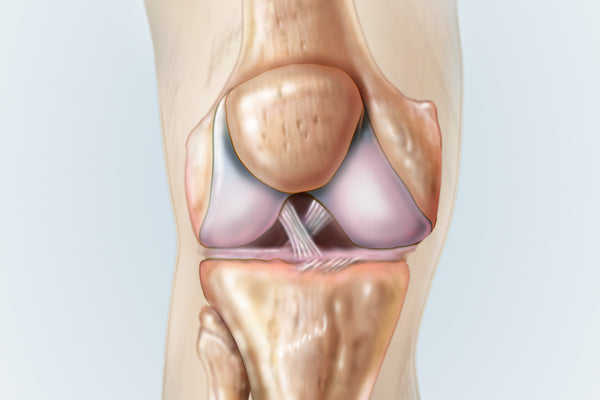
An unfortunate by-product of an ACL injury is the damage to other structures inside the knee. In many cases, we also see an MCL injury and/or torn meniscus. This is often referred to as the Triad, which can complicate both diagnosis and rehabilitation.
2. ACL Injury Symptoms & Diagnosis
Recognizing an ACL injury early is crucial for proper treatment. Typical signs include:
- Knee giving way or buckling
- An audible pop or clicking sound
- Intense initial swelling within hours
- Sudden, intense and deep knee pain
- Feeling of instability
The Lachman's test is currently the most efficient clinical test for ACL injuries:
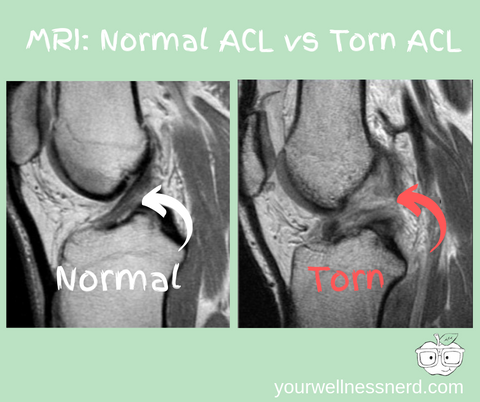
For definitive diagnosis, an MRI remains the gold standard:
3. Beyond Traditional Risk Factors: What We're Missing
Traditional ACL risk factors include:
- Quadriceps and Hamstring muscle imbalance
- Poor general strength and conditioning
- Previous ACL injury
- Gender (women have a higher incidence)
- Playing on artificial surfaces
While these factors matter, they don't fully explain why 70% of ACL injuries are non-contact. The problem with traditional answers is twofold:
- We promote anatomical differences as 'abnormal' when they're not
- Some traditional risk factors cannot be changed
Clinical Perspective: We need to stop looking at women as smaller men and start comparing women to other women. Both male and female knees are appropriately designed to handle the anatomy and physiology they're attached to - in a perfect world.
4. The Ankle-ACL Connection: The Missing Link
Through my clinical work, I've developed this understanding: Compromised leg mechanics may have the greatest impact on what happens to your ACL. This goes beyond bad luck, moving the wrong way, or being a woman.
So what creates one of the biggest compromises to our leg mechanics and directly sets the ACL up to fail? Ankle stiffness.
How Ankle Stiffness Affects Knee Mechanics
I'm not necessarily talking about ankle muscle tightness here. We're talking deep, capsular stiffness - a "rusty joint." The idea is that stiffness at the joint below the knee forces the entire leg to compensate. Ankle stiffness subtly forces the leg to collapse and rotate inwards to find a way around restrictions. This 'valgus' movement leaves the knee consistently at risk due to its basic hinge design.
This default pattern becomes clearly visible when watching someone land from a jump or perform a deep squat:
The first 17 seconds of this video highlight what a collapsed leg position looks like. Notice how the knees cave inward - this is exactly the pattern that can put the ACL at risk.
The Deep Squat as a Diagnostic Tool
The ideal expression of full lower limb mobility in a deep squat includes:
- Feet straight
- Knees rotated fully out
- Arches maintained
- Heels on the ground
- Back straight
- No sense of falling backward
If your ankles are stiff, there's a high likelihood you won't make it to the bottom with good form. Instead, you'll see feet that turn out, knees that collapse inwards, arches that flatten, and heels that lift off the ground.
In short, an ACL injury should be seen as the moment a person's pre-existing poor mechanics fail them. This is regardless of how good an athlete they are or how previously painless or injury-free they have been.
5. Case Study: Nic Naitanui's ACL Injuries
Nic Naitanui, an AFL Ruckman and incredible athlete, has suffered two ACL injuries. His case highlights what I'm seeing clinically with ACL injuries.
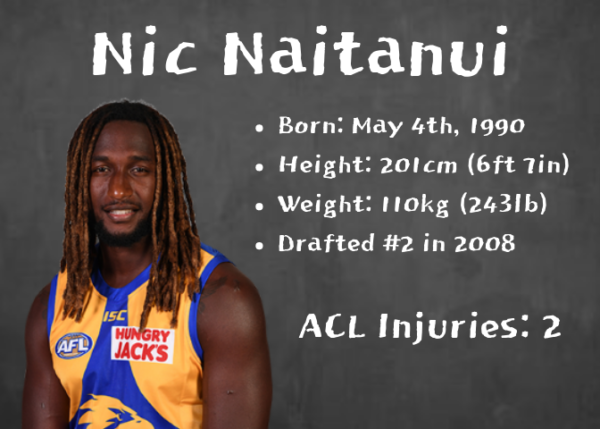
Here's the moment Nic Nat unfortunately ruptured his right ACL in 2018:
@AFL: Nic Naitanui has suffered a knee injury and will not return today. pic.twitter.com/A0Z30A2KEy
Notice how innocuous the incident was and the direction his knee collapses. It's even more revealing to look at his movement patterns before the injuries.
This video from July 2017 (almost a year after his first ACL injury and one year before his second) shows concerning mechanics:
@NicNat: Learning the art of flight again...I'm comin' pic.twitter.com/WuDZqygwvk
Watch what happens to his knees, feet, and ankles at the 15-second, 22-second, and 51-second marks. They violently shunt inwards each time - a carbon copy of the mechanics that led to his ACL injuries.
Here's a picture of him squatting from the very game he most recently re-injured himself:

Notice his heels coming off the ground. Clearly every picture needs context, but this can be a sign of significant ankle stiffness. This pattern isn't unique to Nic Nat - we see similar mechanics in other ACL injury victims:

6. ACL Injury Prevention Exercises
If you're looking to free up stiff ankles and reduce ACL injury risk, the banded ankle stretch is one of the most important prevention exercises.
Banded Ankle Stretch Protocol
- Hook a power band around your ankle joint
- Step forward with your feet straight and create as much band tension as comfortable
- Bend your back ankle (keeping your knee rotated out - don't let it cave in)
- Hold for 1-2 minutes
- Repeat as often as necessary
Expected Result: You should feel an immediate improvement in squat depth and quality after performing this stretch.
7. ACL Injury Treatment Options
Treatment depends on the type and severity of the ACL injury:
Partial ACL Tear
Recovery Time: Approximately 3 months
Rehab Focus: Bracing, reduce pain/swelling, restore range of motion, gradually rebuild strength, sport-specific conditioning
Complete ACL Tear/Rupture
Typically requires ACL reconstruction surgery with an expected return to sport around 12 months post-surgery. Interestingly, we are now seeing cases where ruptured ACLs may heal on their own without surgery.
chance of re-injury in the first few years after surgery - highlighting why addressing underlying mechanics is crucial
8. Comprehensive Rehabilitation Protocol
Here is a comprehensive ACL recovery program.
Strength and conditioning will always play an important role in ACL recovery, but we need to place more emphasis on improving how we move.
I find squat and deadlift shapes to be some of the best ACL rehabilitation exercises to master during rehab. The key is to maintain both a straight, well-braced spine and an external rotation force at the hip (knees out) throughout each movement.
These basic human movement patterns engage all the major muscle groups needed for proper leg function and can be scaled from basic post-op movements to advanced sport-specific training.
Key Rehabilitation Principles
- Remove restrictive handbrakes at the ankle, hip, and low back
- Retrain robust and functionally sound movement patterns
- Progressively build capacity while maintaining optimal mechanics
- Incorporate sport-specific demands only when the foundation is secure
Conclusion: A New Perspective on ACL Injuries
An ACL injury can be devastating, but from what I see clinically, they may not be the sudden, knee-specific dose of bad luck we often promote them to be.
Instead, they may be a failure of already vulnerable leg mechanics to tolerate a situation that, in a perfect world, should pose no threat to your knees.
Key Clinical Takeaways:
- Traditional causes (landing, pivoting, etc.) may expose flaws rather than create them
- Ankle stiffness may be the biggest contributing factor to non-contact ACL injuries
- Hip mobility/control and low back function consistently fly under the radar
- Strength matters, but movement quality matters more
- Deep squats reveal mechanical compromises that put ACLs at risk
This article represents clinical observations from my Physiotherapy practice. Individual cases may vary - always consult with your healthcare provider for personalised medical advice.
I genuinely hope this article offers a fresh perspective - or at least one useful takeaway. If you have a different issue, or simply want to learn more about how your body moves, head over to the Your Wellness Nerd YouTube channel. Subscribe if you feel inclined, and let me know in the comments what you'd like me to cover next.
– Grant
Frequently Asked Questions
What percentage of ACL injuries are non-contact?
Approximately 70% of ACL injuries are non-contact, meaning they occur without direct impact to the knee. This suggests they're potentially preventable by addressing underlying mechanical issues.
How does ankle stiffness affect ACL injury risk?
Stiff ankles force the leg to compensate by collapsing inward (valgus) during movement, which puts the ACL at risk. The banded ankle stretch is a key prevention exercise to restore ankle mobility.
What did Nic Naitanui's ACL injuries reveal?
His movement patterns showed significant ankle limitations, with heels lifting during squats and knees collapsing inward. These same mechanics were present before his injuries, highlighting the role of ankle stiffness.
What is the best exercise to prevent ACL injuries?
The banded ankle stretch is one of the most important prevention exercises. It restores ankle mobility, which reduces the compensatory valgus collapse that puts the ACL at risk.
One profound insight from this post
"70% of ACL injuries are non-contact. Ankle stiffness may be a missing link - forcing the leg to collapse inward and putting the ACL at risk."
Living With Persistent Pain?
If your pain has lasted longer than expected, feels disproportionate to injury, or hasn't responded to standard treatment, you may benefit from a broader approach. Learn more about our knee pain physiotherapy services in Port Macquarie.
Want personalised guidance?
If you'd like help making sense of your aches, pains, or ongoing symptoms, you can book with Grant either in Port Macquarie or via an online telehealth consultation.


